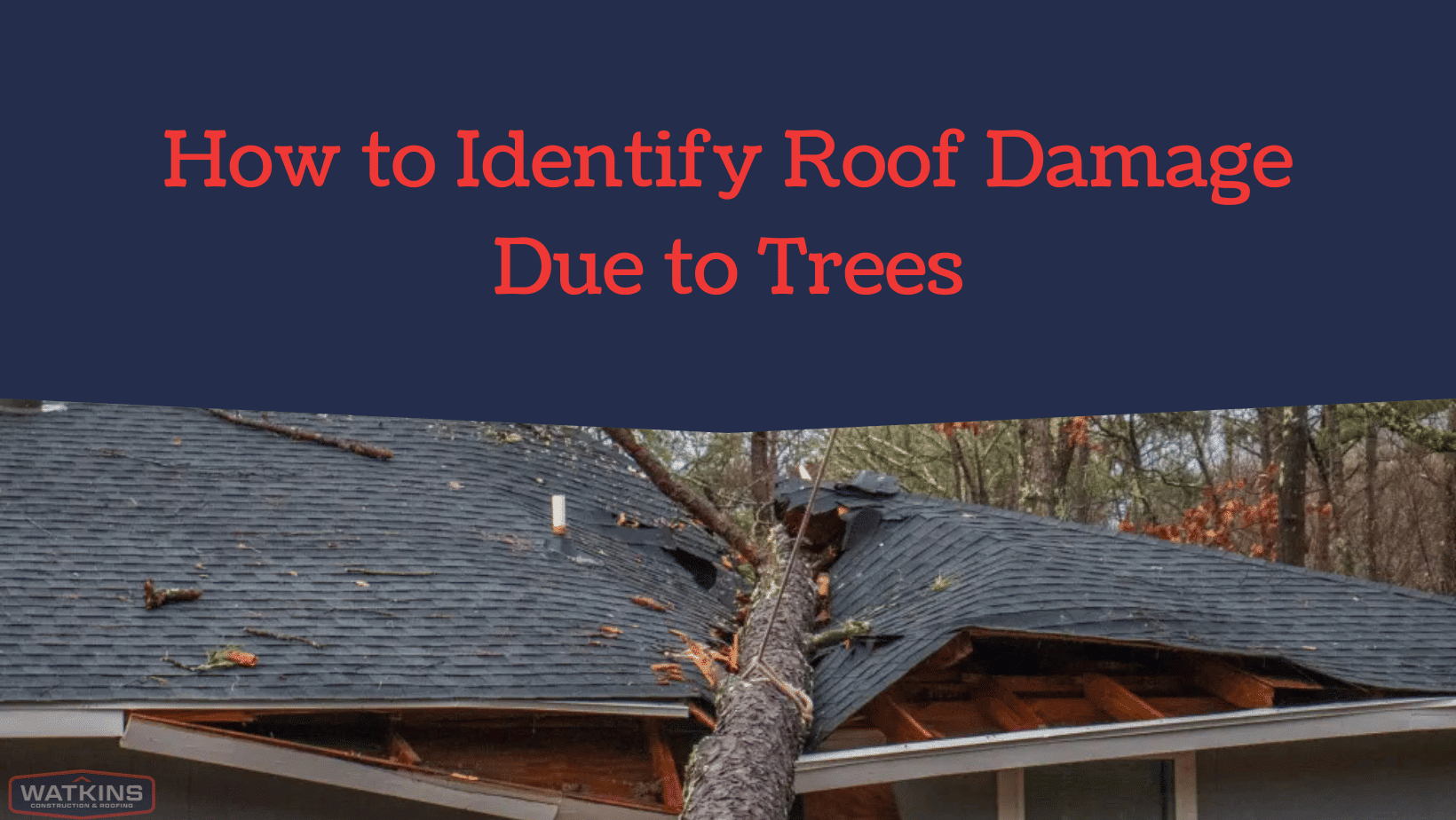
Watkins Construction & Roofing has put together a guide on how to identify roof damage due to trees. Most people picture the worst-case scenario when thinking about tree damage to their roofs. Surely, you have the image of a massive branch or the entire tree falling on their house! This possibility is highly probable. But it is also vital to know that trees in the neighborhood might cause other, less obvious forms of roof damage.
You should be aware of the many ways in which trees may harm your roof. For example, dropping debris can accelerate the deterioration of your shingles. Besides, they clog your gutters, providing a means for animals to get access to your roof and attic.
Even if you don’t see any damage from the ground, your roof may not perform as well as it might. Let’s look at the causes of roof damage and how to identify them.
How to Recognize Tree-Related Roofing Damage
It may be immediately evident that a tree fell on your roof and caused damage. But, in other situations, the damage may not be so obvious. So, to spot the warning indications of roof damage, it is necessary to do frequent inspections and examine the roof after storms.
-
Missing Shingles
Having shingles fall off your roof might be a sign that trees in the area have caused damage. High winds and animals like raccoons and squirrels are also to blame.
A tree may not cause direct harm to your roof. Yet, its branches may provide access for animals. They will do whatever it takes to get into your attic or crawlspace. That includes tearing off or dislodging your shingles.
-
Scratches, Cracks, or Broken Shingles
Cracked, scraped, or broken shingles may be the most noticeable indicator that trees have caused damage to your roof. Other signs of roof damage are curling or displaced shingles.
Overhanging branches, or even simply needles or leaves falling from them, can cause damage to shingles.
Storms and other harsh weather may also cause scratches and cracks in your shingles. Keep in mind that ice can accumulate on tree branches over the winter, perhaps causing them to sag and touch or fall on your roof.
-
Moss or Mold Growth
Moist conditions are necessary for the growth of both mold and moss. Do you see any of these microorganisms developing on your roof? It is a sign of moisture excess, which usually indicates a leak.
If a tall tree reflects its shadows on the roof of your building, it may be necessary to prune its branches to prevent mold and moss growth.
-
Fallen Needles and Leaf Litter
We should expect some of this in the fall. But persistent needle or leaf accumulation all year round may point to a drainage issue with your roof.
Water may back up if leaves and needles collect in your gutters and drains. This water may create leaks and other issues by getting under your shingles or accumulating on your roof.
-
Animals on Your Roof
If you see animals up there or in your attic, investigate how they got there. Squirrels, raccoons, and other wildlife may use the branches of nearby trees as a route to your roof.
Dropped Fruit and Nuts on Your Roof
Not only may falling fruits and nuts fracture or break your shingles and block your gutters. But they can also cause damage to your roof.
Birds and squirrels, for example, will flock to your roof in search of the fruits and nuts that have fallen there. Therefore, pests may be attracted to your roof, where they may wreak havoc on your HVAC.
-
Shadows Cast on Your Roof
A nearby tree can pose problems even if it never touches your roof with its limbs, needles, leaves, nuts, or fruit. Blocking the sun might cause your roof to become dark and wet. These conditions are ideal for the growth of moss and mold.
Inadequate exposure to sunshine also makes it harder for your roof to dry after a rainstorm. Also, trees can block the sun’s rays which hasten the deterioration of your roof’s components, increasing your attic temperature. Are you worried about the effect of a tree’s shadow on your roof? It is a good idea to see a roofing expert to determine whether the tree is helping or harming your roof.
Experiencing nature around our homes is pleasant. However, those trees close to our house can also mean some threats.
Here, we explored the factors that sign roof damage because of trees. Consider these elements and talk with your local, trusted contractor to check the risk of roof damage by trees on your next roof inspection
Watkins Construction & Roofing can provide you with the help you need. You can get in touch with us by calling us at 251-299-8151. We service areas in Gulf Shores, Spanish Fort, Foley, Fairhope, Robertsdale, and Orange Beach, AL.
